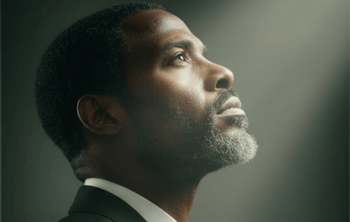


He was taught that strength is carrying more. Nobody told him that sustainable strength is knowing when to redistribute.
The men who raised you were not wrong about strength. What they knew, what they passed down, came from real necessity. It worked. You are here because it worked. The argument is not that survival strength was a mistake. The argument is that it was built for specific conditions and was never designed to run indefinitely. There is a difference between those two things, and that difference matters more than most men have been given space to consider.
This is not a conversation about going from strong to soft. It is a conversation about going from one kind of strong to another kind that lasts longer.
What survival strength is and why it worked
Survival strength is endurance-based. It operates on a clear and effective principle: bear the weight, keep moving, do not break down in front of anyone who needs you to be steady. It teaches a man to hold the line when everything around him is uncertain. To show up regardless of what he is carrying internally. To protect by absorbing, financial pressure, family stress, systemic barriers, relationship tension, so the people he loves do not have to feel the full weight of any of it.
That model produced real outcomes. It kept families housed and fed through conditions that were not designed to support them. It built men who showed up when showing up required something most people could not sustain. It created a particular kind of quiet dignity, the dignity of a man who keeps his word, carries his load and does not ask for more credit than he can earn.
For generations of Black men navigating environments that were actively hostile, this was not optional. It was adaptive. It was a correct and intelligent response to the conditions. Dismissing it would be dishonest and it would miss what it actually built.
The question is not whether survival strength was real or valuable. It was both. The question is what happens when the conditions shift but the operating mode does not.
What it costs when survival strength runs indefinitely
Every system has an operational range. Run it past that range long enough and the cost accumulates, not as a single breakdown but as a slow pressure that most men do not name until it has been building for years.
For Black men running survival strength past its design threshold, that cost tends to show up in recognizable patterns. Chronic exhaustion that sleep does not fully fix. A growing distance from the people they are closest to, not from lack of love but from having no bandwidth left for the emotional register that real closeness requires. A narrowing of the space between fine and not fine until the range barely exists. And a specific kind of loneliness: surrounded by people who need you, with nobody who actually sees what that requires of you.
Black Men and Emotional Exhaustion: When Holding It Together Becomes the Problem covers what that accumulation looks like in real terms. If any of that is familiar, it is worth reading alongside this one.
The cost compounds in relationships too. A man running purely on survival strength tends to show up as a provider and protector, both genuinely important, but may find it harder to show up as a partner in the fuller sense. Not because he does not want to. Because nobody taught him those were different things, or that one did not have to come at the expense of the other. The Partnership Blueprint Bundle was built directly for that gap.
The cost also shows up in the body over time. Stress carried without discharge, tension held without outlet, decisions made without adequate rest, these are not abstract concerns. They are physical realities that land eventually.
None of this is a character flaw. It is what happens when a tool built for specific conditions gets used outside its design parameters for too long. The tool is not broken. It is being used for something it was not built to sustain indefinitely. For more on where that leads emotionally, Why Black Men Go Quiet: Understanding Emotional Shutdown and Black Men and Mental Health: What Actually Gets in the Way of Asking for Help are both relevant context here.
The difference between endurance and sustainability
Endurance and sustainability are not the same thing, though they are often treated as if they are.
Endurance is the capacity to keep going under load. Sustainability is the capacity to keep going under load while replenishing what the load draws down. The difference is not in the going. It is in whether the system can restore itself while it operates.
A man running on endurance is drawing down reserves. He can go a significant distance on that. Many men do, and they go further than most people around them could manage. But endurance without replenishment has a ceiling. And that ceiling tends to arrive at exactly the moment the people around him most need him not to hit it.
Sustainable strength operates differently. It still carries. It still holds. It does not ask a man to stop being who he is. But it builds in the capacity to recover, through honest communication, through knowing the difference between what he should carry alone and what he does not have to, through allowing the people closest to him to contribute rather than just receive.
The shift from one to the other is not a weakening. It is an upgrade. The core function is the same. The operational range is longer.
If you recognize yourself in this, do not leave without clarity.
Enter your email to access 5 Signs You're Surviving When You Should Be Healing. It takes 90 seconds and breaks down what is actually happening beneath what you have been managing.
What sustainable strength actually looks like in practice
Sustainable strength is not a personality type or a disposition you either have or do not. It is a set of practices that extend a man's capacity over time. Here is what it actually looks like day to day.
It looks like a man who knows the difference between carrying something and being crushed by it, and who has developed enough self-awareness to notice when the second one is happening before it becomes a crisis.
It looks like communication that comes before the explosion rather than after. Not because talking about things is easy or natural, for most men it is neither, but because the man has learned that the cost of not speaking tends to be higher than the cost of finding the words.
It looks like asking for what he needs in a relationship without framing that as a failure of independence. It looks like allowing the people closest to him to contribute to what he is carrying, not because he cannot manage it alone but because managing everything alone indefinitely produces a version of him that is functional and present but not fully there.
It looks like rest that is taken without guilt and without having to be earned through complete collapse. Rest as maintenance, not as surrender.
It looks like a man who is harder to break, not because he has insulated himself from difficulty but because he has built the capacity to process difficulty rather than simply absorb it and keep moving. And it looks like a man who is more available to the people around him, not less. Sustainable strength does not reduce what a man can give. It extends how long he can give it.
Therapy for Black Men: What to Know Before You Decide is relevant for men exploring what professional support looks like as part of building that capacity. It is a useful read if that has been something you have been turning over.
How to move from one to the other without losing who you are
The real concern underneath this conversation, for most men, is not that sustainable strength sounds wrong. It is that pursuing it might require becoming someone they would not recognize. That what gets called growth will cost them something fundamental about who they have always been.
That concern deserves a straight answer.
The move from survival strength to sustainable strength is not a personality transplant. It is an expansion. The core of who you are, the loyalty, the discipline, the commitment, the capacity to carry weight most people would not touch, none of that disappears. What changes is the range. What becomes possible is a version of you that has all of that and also knows how to replenish, how to communicate what you need, how to be present in the specific ways the people closest to you are actually asking for.
Start with honest observation before any action. Before changing anything, spend real time looking at what your current model is costing you. Not abstractly, specifically. Your energy across a typical week. Your emotional availability at the end of a day. The quality of your closest relationships. What you are not saying that you know needs to be said. Where the weight is going that never seems to get put down.
Black Men and Emotional Exhaustion: When Holding It Together Becomes the Problem is a useful starting point for that kind of inventory.
Then find a framework that fits how you actually think. Not every tool for this work fits every man. Some move through it through conversation, with a therapist, a trusted peer, a partner capable of holding complexity without making it a referendum on who he is. Some need a structured, private starting point. Healing in His Prime was built for that, for the man who wants to begin the work on his own terms, in his own time, without having to perform a kind of openness he has not built toward yet.
For the man whose sustainable strength work intersects directly with his relationship, how he shows up, what he communicates, how partnership actually functions when both people are trying to build something real, The Partnership Blueprint Bundle is the resource built for that work. Not as a crisis intervention. As a proactive set of tools for men who are already invested in getting this right.
What you are not doing is starting over. You are building on what is already there. Everything survival strength produced, the discipline, the resilience, the bone-deep understanding of what it means to commit to something, that is the foundation. Sustainable strength is what you construct on top of it.
You do not become less of a man by knowing what you need. You become harder to break.
Healing in His Prime and The Partnership Blueprint Bundle are both available now at Black Men in Partnership. Healing in His Prime is the individual starting point. The Partnership Blueprint Bundle is for the man ready to bring this work into his relationship.
Disclaimer: This content is for informational and educational purposes only. The author is not a licensed therapist, counselor, or medical professional. It is not a substitute for professional mental health or therapeutic care. If you are in a mental health crisis, please seek support from a qualified professional.
In partnership and progress, Celeste M. Blake, Author and Wellness Advocate, Founder of Black Men in Partnership. Because strong, present, and whole is not a performance. It is a choice made daily. Because strong, present, and whole is not a performance. It is a choice made daily. For the man who keeps choosing to grow.