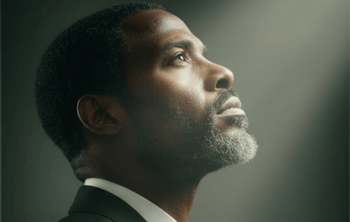


He needs to be held without having to earn it first. He needs to be known, not just useful. Most of the time he does not know how to say that. Most of the time he does not say it at all.
If you’ve ever felt this but couldn’t put it into words, I wrote something for you.
A short guide that names the needs most Black men carry but rarely say out loud.
If something in this hit you, do not ignore it enter your email and get the guide that shows you what you have been carrying without knowing it. → The Need Most Black Men Never Name
This is not about men who refuse to communicate. It is about men who were trained so thoroughly to carry without asking that the asking mechanism never fully developed. The need is there. The language for it often is not. The gap between those two things is where most Black men spend their relational lives.
If you are navigating that gap and trying to understand what is underneath the weight you carry, the Black Men Who Hold It Together: The Complete Guide to Emotional Wellness, Caregiving, and Relationships names the full architecture of Black men relational needs and what being known not just needed actually requires inside a partnership.
If you have not yet read What Black Men Are Carrying and Why Nobody Talks About It, that is where the weight gets named before this blog goes into what the weight costs inside a relationship specifically. Both pieces work together. This one goes deeper into what partnership requires when the load has been carried alone for a long time.
Acknowledgment is the first one. Not praise. Not applause. Acknowledgment. The quiet recognition that what you are doing is real, that the weight you carry is visible to someone, that the consistency you bring does not disappear into the air the moment it is delivered.
Most Black men will not ask for this. Asking for acknowledgment can feel like admitting that the role was harder than you let on. The internal logic goes: if I need recognition, maybe I was not as solid as I presented. Maybe I was not handling it as well as everyone thought.
That logic is wrong. It is also everywhere.
The second need is rest. Not sleep. Rest. The kind where nobody needs anything from you for an hour and you do not spend that hour waiting for the moment someone will. The kind where your mind is not already on the next problem while you are supposed to be present in this one. Most Black men have not experienced that kind of rest since childhood. Some have never had it at all.
The third need is emotional safety. The ability to not be strong for a moment without it reading as collapse. To say I am struggling without it becoming something your partner now has to manage. To show a crack without it destabilizing the structure everyone is depending on.
If you have ever swallowed something difficult because you did not want to become a problem, you know exactly what this need is. You also know what swallowing it costs.
The fourth need is the most fundamental. To be known. Not needed but known.
There is a version of partnership where a man is indispensable and invisible at the same time. He solves the problems. He manages the logistics. He absorbs the crises. He stays. And nobody in that partnership knows what he is afraid of, what brings him back to himself after a hard week, what he has carried for years without naming it to anyone. He is essential. He is also unknown.
Being needed and being known are not the same thing. One is a function. The other is a relationship. Most Black men are functioning fluently inside partnerships where they are not actually known.
The fifth need is the one most likely to go unspoken for years: reciprocity. Not transactional equity or a ledger. The knowledge that someone is thinking about your wellbeing before you have to ask them to. That someone checks on you the way you check on everyone else.
You are the one who asks how everyone is doing. Who calls to follow up. Who notices when something is off. Most Black men do this instinctively and receive it rarely. After long enough, you stop expecting it. You tell yourself you do not need it. That is not the same as not needing it.
Why naming them feels impossible
Most men won’t say these things out loud.
Not because they aren’t real.
Because they were never given the language.
This guide gives you that language.
Not theory. The actual words.
If you have been holding it together but feeling less connected less patient and harder to reach, enter your email and get the guide that shows you what is actually going on.
The Need Most Black Men Never Name
You were trained to carry, not to request.
The men who raised most Black men, across the Caribbean, across West Africa, across American cities and Canadian suburbs, demonstrated love through action. Through showing up. Through handling what needed handling. The emotional interior of that love was often present and rarely spoken. What gets passed down is the behavior without the vocabulary.
So you know how to sacrifice. You know how to endure. You know how to anticipate what is needed before anyone asks. What you were not handed is the language for: I need something right now. Not a solution. Not a plan. Just presence. Just someone staying with me while I hold this.
That language is not weakness. It is the infrastructure of real partnership. And its absence costs both people, you, because the need goes unmet, and your partner, because she cannot give what she does not know is being asked for.
There is also the mathematics of risk. If you name a need and it is not met, if you ask to be acknowledged and get silence, if you say I need to not be the strong one right now and the person across from you cannot hold that, the cost of having asked feels larger than the cost of not asking. So the asking stops before it starts.
That math is not irrational. It is the product of specific experience. It is also what keeps the partnership operating at a fraction of what it could be.
Why Black Men Go Quiet: Understanding Emotional Shutdown covers this pattern directly, why the silence develops, what it looks like from inside the man's experience and from his partner's, and why the gap between those two readings is almost always wider than either person realizes.
What it costs when they go unspoken
The needs do not disappear. They compress.
A man who cannot name what he needs learns to manage the absence of it. He stays functional. He stays present in the practical sense. But something in him withdraws from the relational depth of the partnership in increments small enough to miss until the distance is wide enough to feel.
He is not withholding intentionally. He is protecting himself from the exposure of wanting something he does not believe is available.
His partner on the other side of this often reads the withdrawal as indifference. She does not know she is standing at the edge of an unspoken need. He does not know how to tell her. The distance holds itself open with no one's hands on it.
The cost shows up in the body. The sustained work of performing wholeness when you are depleted, of being the solid one in every room, does what sustained stress always does. Not metaphorically. Physiologically. It accumulates, and it goes somewhere.
The cost shows up in the relationship's ceiling. A partnership where one person is unknown cannot reach certain depths. Not because of incompatibility. Because the full person is not fully in the room.
What a partnership looks like when these needs are met
When a Black man's relational needs are genuinely met, not perfectly, not completely, but actually, the partnership changes in ways that are difficult to quantify and immediately recognizable.
He is less reactive because he is less depleted. He has more presence to give because the ground underneath him is steadier. He can stay in a difficult conversation because there is somewhere soft to land afterward. The relationship has more room in it because he is more fully inside it.
A partner who is curious about who you are beneath what you handle, who asks how you are and means it, who can sit with your silence without converting it into anxiety, who notices when something is off before you have announced it, changes the operating conditions of the entire partnership.
On your side, it requires the harder thing. Being willing to be known. Answering the question honestly when someone asks it. Saying I am not okay when you are not okay. Describing what is in your interior life rather than only managing it.
The Partnership Blueprint Bundle was built for the full navigation of this, the translation work of being in a real partnership as a Black man, with all the conditioning that arrived before the relationship did. It goes into the relational needs, the communication mechanics, and the specific language for conversations most men have been circling for years without landing.
Healing in His Prime addresses the interior work. The part that has to happen before partnership can hold the full weight of who you are.
How to start the conversation
You do not have to open everything at once.
One need. Named plainly. That is where this starts.
It sounds like: I need you to check on me sometimes. Not because I am falling apart. Because I want to matter to you the way I try to matter to everyone else.
Or: I need rest that I do not have a name for yet. Time where nothing is required of me. Not sleep. Space.
Or the hardest one: I need you to want to know who I am. Not what I handle. Who I am when none of the handling is required.
If you recognized yourself in even one of these, don’t leave it here.
You’re not the only one carrying this. Start with this: The needs most Black men never name
Download → The needs most Black men never name
These are not demands. They are the beginning of a different kind of partnership. They open a door most Black men were trained to keep closed because nobody showed them there was a room on the other side worth entering.
How to Build a Relationship That Actually Works: A Framework for Black Men covers what the architecture of that partnership requires and how to build toward it starting from wherever you are right now.
The need is not weakness. The silence around it is what costs you.
If something in this hit you, do not ignore it enter your email and get the guide that shows you what you have been carrying without knowing it.
The Need Most Black Men Never Name
Disclaimer:
This content is for informational and educational purposes only. The author is not a licensed therapist, counselor, or medical professional. It is not a substitute for professional mental health or therapeutic care. If you are in a mental health crisis, please seek support from a qualified professional.
In partnership and progress, Celeste M. Blake, Author and Wellness Advocate, Founder of Black Men in Partnership. Because strong, present, and whole is not a performance. It is a choice made daily. blackmeninpartnership.com. Because strong, present, and whole is not a performance. It is a choice made daily. For the man who keeps choosing to grow.